Where should CCTV cameras be installed around a house?
Plan useful views of entrances, driveways and side access without relying on a single wide camera or a fixed mounting height.
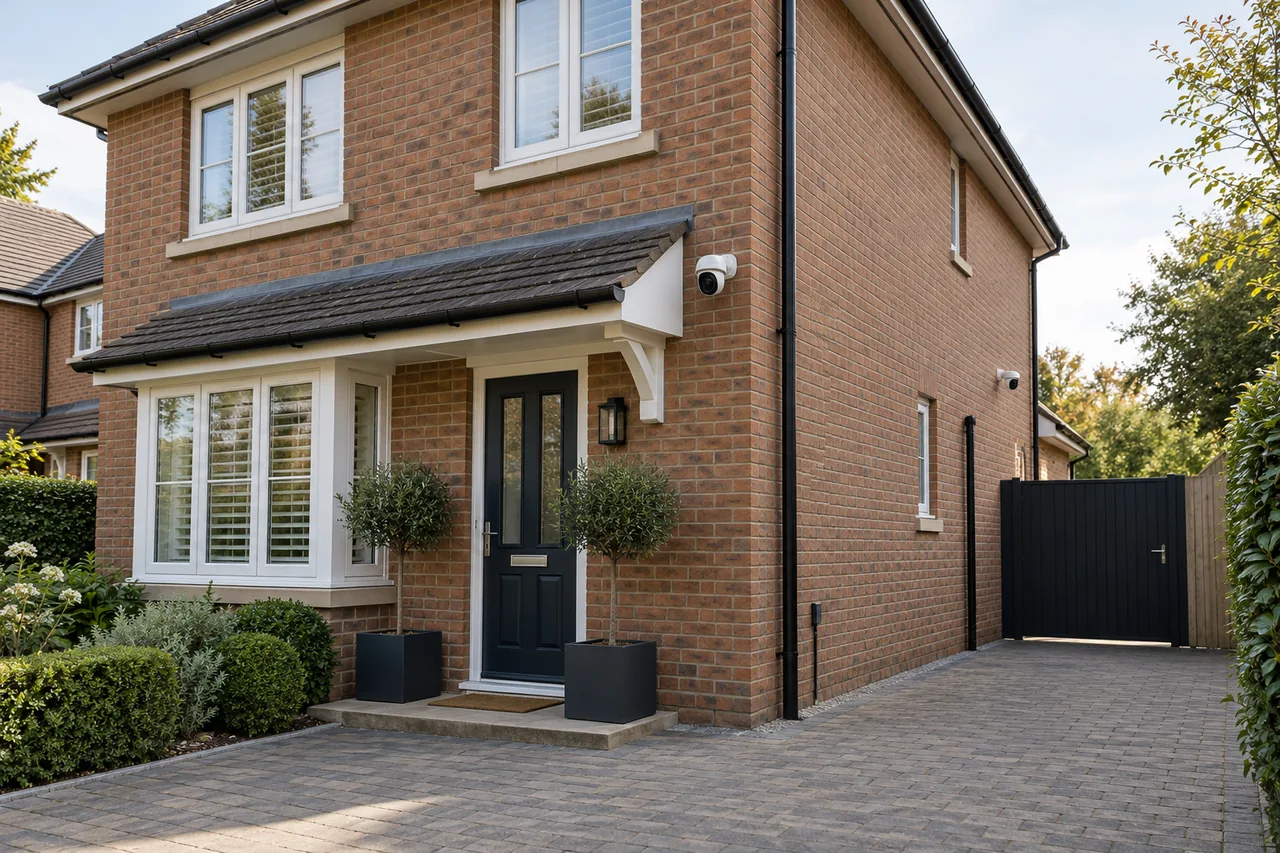
Start with the routes people use to approach your home: the front entrance, side access, rear doors and driveway. Give each camera a clear purpose, check the view in daylight and darkness, and avoid recording more of neighbouring or public space than necessary.
Give every camera a job
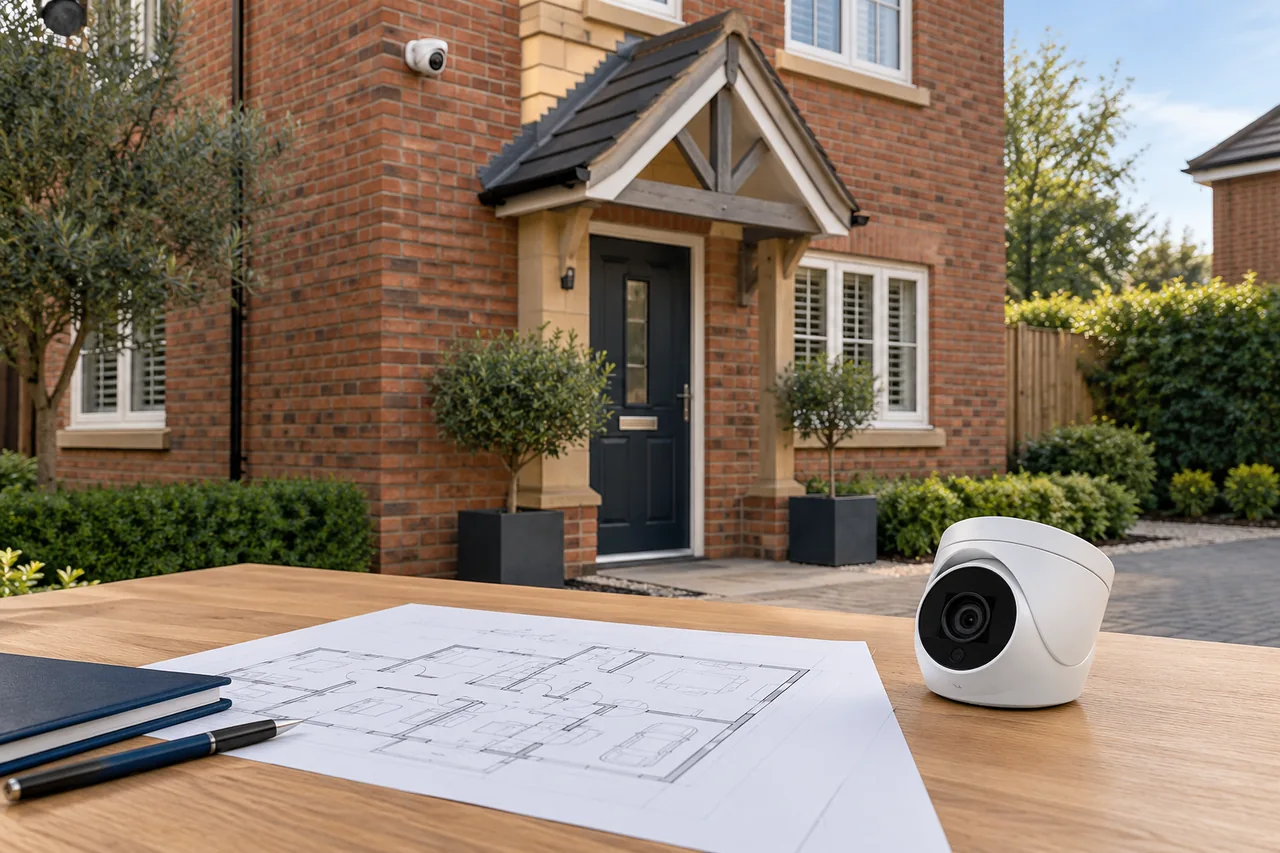
Sketch the house, gates, paths, parking and outbuildings. Mark the places where you want to understand activity and the points where you need a closer view. An overview can show someone crossing a driveway without necessarily showing their face clearly enough at the front door.
Start with this distinction: what is the problem, and what would a useful image show? Camera count comes afterwards. Overlapping two carefully chosen views can be more useful than stretching one very wide view across several unrelated areas.
Walk through the main approach routes
| Area | Useful view | Common difficulty |
|---|---|---|
| Front entrance | A visitor approaching and standing at the door. | A steep view showing mainly the top of a head, or strong backlight. |
| Driveway | Vehicles, people approaching and the route to the house. | Headlights, excessive distance or assuming an overview will read every number plate. |
| Side passage | The gate and the route towards the rear. | Walls, pipes or nearby surfaces reflecting night illumination. |
| Rear doors & garden access | Approaches to vulnerable doors or an outbuilding. | Vegetation, lighting changes and unnecessary capture beyond the boundary. |
These are survey priorities, not a requirement to put a camera in every listed position. The layout and your concerns determine the design.
There is no single correct height or lens
A high mounting point may protect a camera and give a broad overview, but it can produce a steep angle on someone close to the wall. A lower, more focused view may help at an entrance, provided mounting and tamper risks are considered.
Lens choice and distance matter alongside resolution. A wide view spreads the available image detail across more of the scene. The same focal-length label does not guarantee the same view on every camera: sensor size and the particular model matter too.
Ask to review a test view from the intended location before positions are finalised. Do not use digital zoom on an empty daytime scene as the only test of whether the camera will show moving people clearly at night.
Check the difficult conditions
Look for bright sky behind a visitor, vehicle headlights, porch lights and dark corners. At night, nearby walls, soffits or glass can reflect a camera’s illumination and interfere with the useful view. Leaves and cobwebs close to the lens can also become a problem.
A camera looking through a window needs particular care; reflections can make a view that looks reasonable by day poor after dark. Night illumination, exposure and mounting position should be assessed together.
Check that the installation remains accessible for cleaning and adjustment, and that the cable route and exposed connections are protected appropriately.
Include privacy and playback in the final check
Where possible, aim cameras at your own property. The ICO’s home CCTV guidance explains that recording beyond your boundary brings data protection responsibilities. It covers limiting capture, signage, secure storage, deletion and requests for footage. Review the current guidance for your setup.
Privacy masking can help exclude an unnecessary part of a view. Audio needs its own consideration; do not assume it should be enabled simply because a camera has a microphone.
At handover, check each view, find a recording and practise exporting it. Arrange how the night images will be reviewed. For a real example of a wider home design, see the Dunstable CCTV, doorbell and alarm installation, or explore our CCTV installation service.
Discuss your own property. WESEC is based in Aylesbury and covers surrounding areas, including Milton Keynes and Tring, subject to postcode confirmation. Check our service areas.