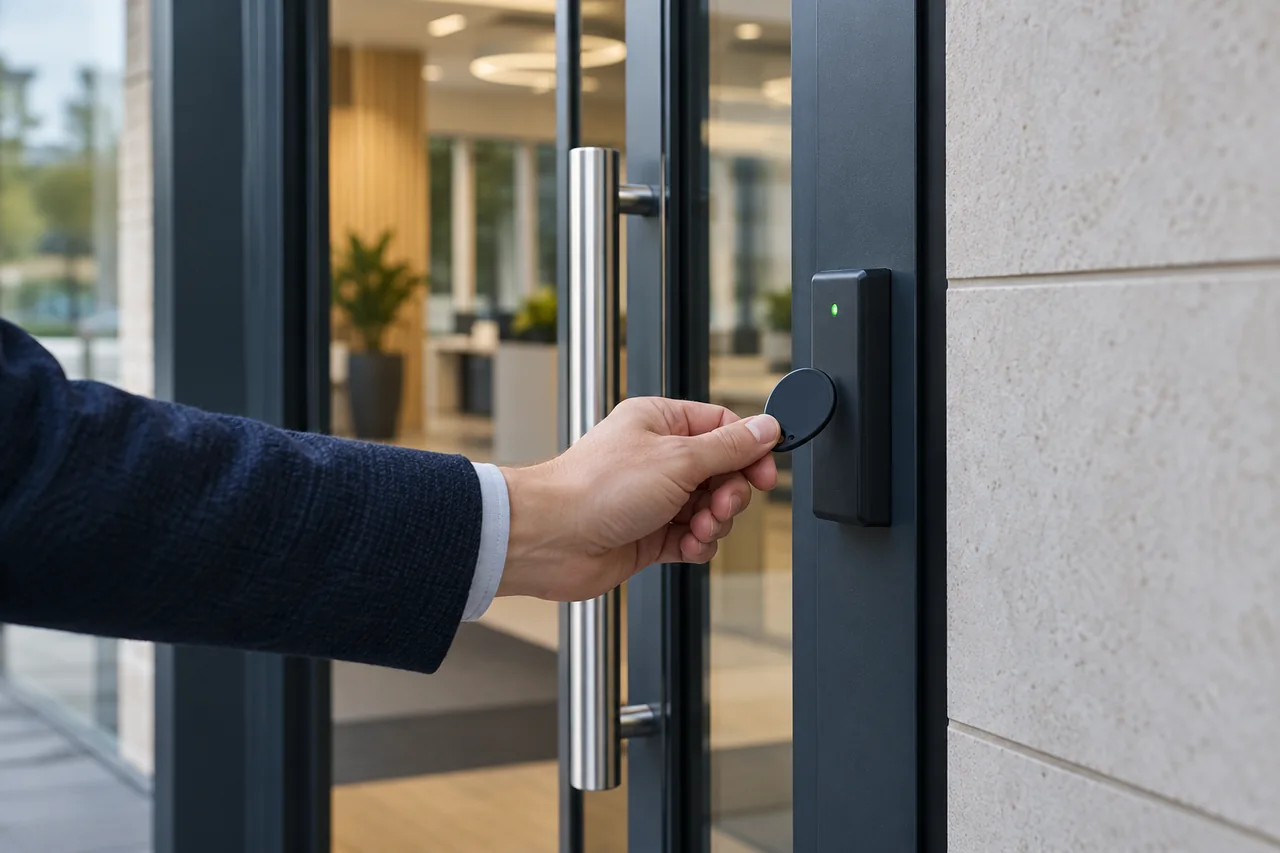
Why does the door stay unlocked even though the reader works?
A reader light or beep is only one part of the process. Check how the door, lock and control arrangements fit together.
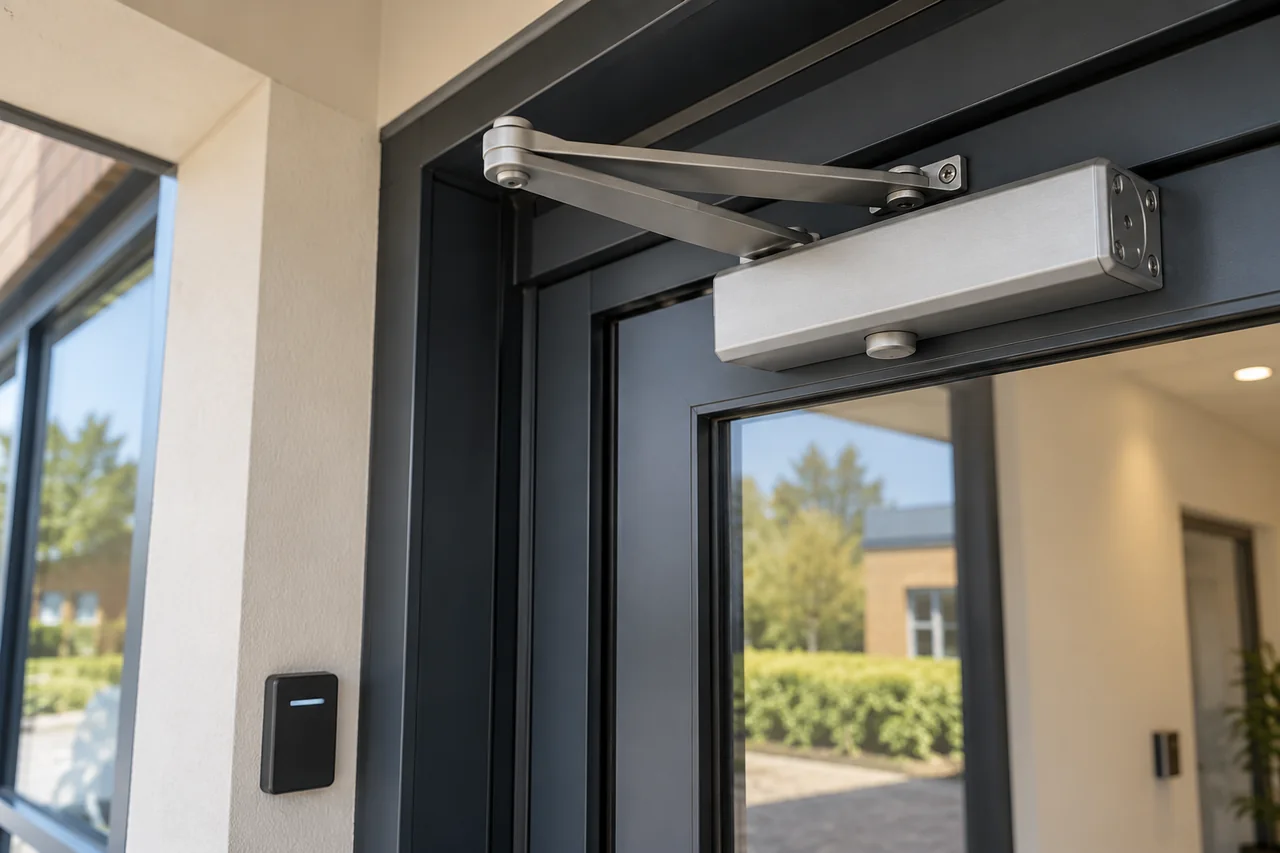
A responding reader does not prove that the door is secure. The system may be granting scheduled access, the lock may not be operating correctly, or the door may not be closing and engaging with its hardware. The complete door needs checking.
What the reader actually confirms
A light or beep can show that a credential was read or access was granted, depending on the product. It does not by itself confirm that the lock released, relocked or engaged with the door.
Describe whether the problem occurs after a valid fob, at all times or only during particular hours. Check whether the door can be opened without presenting a credential. An access event and a door-position event may also be different records on systems that support both.
Does the door close and engage?
A misaligned leaf, obstructed threshold, worn latch or poorly adjusted closer can prevent reliable closing. A magnetic lock also needs the intended contact between its components. The reader cannot correct the physical condition of the entrance.
Observe normal closing without forcing or dismantling the hardware. Note whether someone has to pull the door shut, whether it catches on the frame and whether the issue changes with wind or busy periods. A door that is routinely propped open needs an operational response as well as technical checks.
Check intended behaviour as well as faults
Some doors are intentionally unlocked during agreed hours. A release input, intercom command, controller setting or fault elsewhere can also influence lock operation. What is expected must be established before the behaviour is called a defect.
Supported systems offer different lock and input arrangements; Paxton’s Net2 overview describes the controller’s role alongside readers, locks and exit equipment. Specific troubleshooting requires the installed design and product documentation.
Keep normal exit and emergency arrangements in mind
Locking equipment, power supplies and release interfaces must be considered together. A change that appears to make the entrance more secure can affect how people leave it or how it responds to an emergency.
Do not defeat release equipment, improvise a permanent lock connection or assume every lock should remain locked during power loss. Agree the required behaviour with the responsible parties and test the complete installation after repairs.
Make a useful fault report
Tell us the door location, when it stays unlocked, what the reader indicates and whether it closes reliably. Mention recent changes to schedules, power, intercoms or door hardware.
Access control servicing can investigate the physical door and its control equipment. If the design needs changing, the installation guide explains what should be included in a complete door proposal.
Discuss your own property. WESEC is based in Aylesbury and covers surrounding areas, including Milton Keynes and Tring, subject to postcode confirmation. Check our service areas.