How should CCTV cables be installed and protected?
Understand tidy routes, suitable cable, protected connections and the checks that matter beyond simply getting a picture.
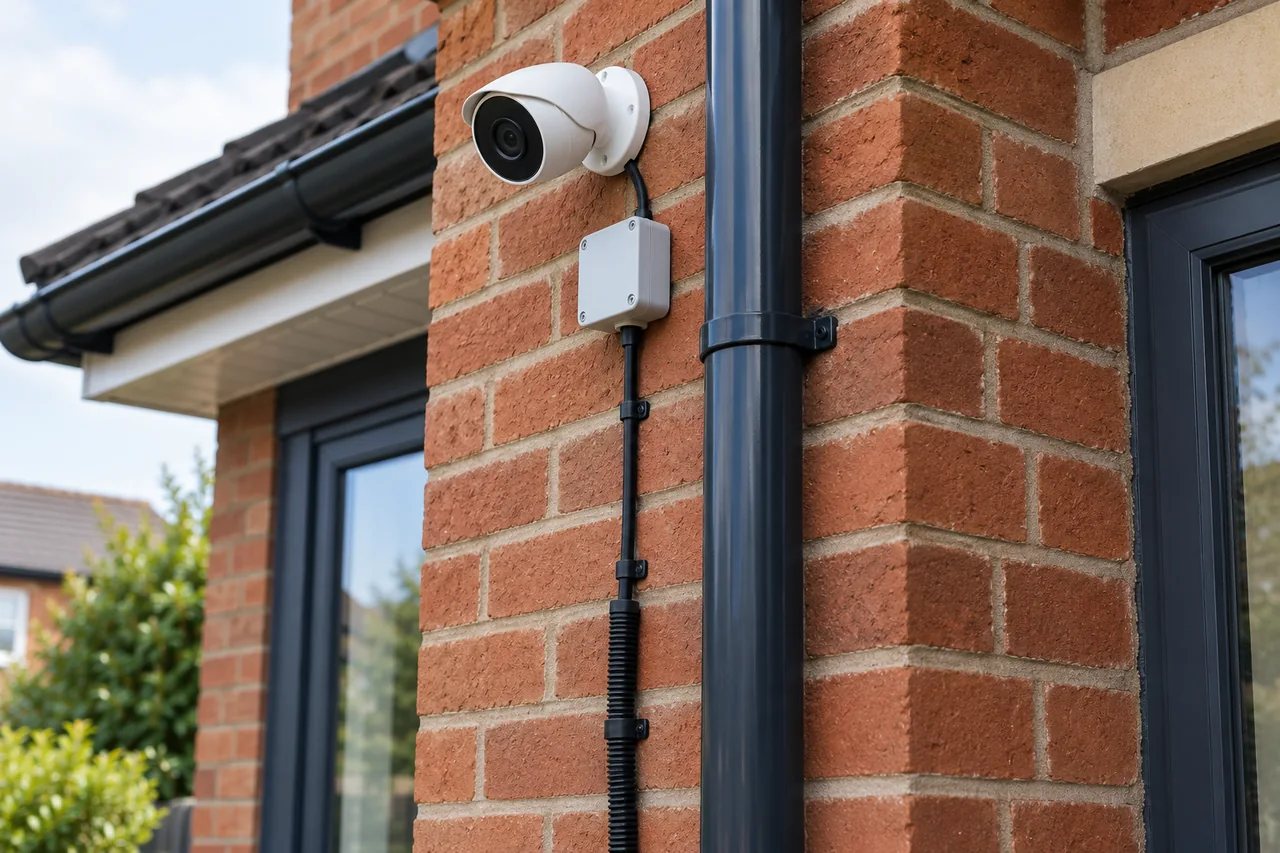
Good CCTV cabling is planned for the route and environment, supported without damage, protected where exposed and tested before handover. Agree the visible finish and any reuse of existing cable before work starts. Neat appearance and reliable performance both matter.
Plan the route before choosing the finish
Start with camera positions, the recorder location and the practical routes between them. Look at accessible lofts, building changes, external walls and any separate garage or outbuilding. The shortest route is not always the neatest or most maintainable one.
Agree what will be visible: cable colour, clips, trunking or conduit, entry points and how finished surfaces will be treated. Existing routes may help, but their condition and suitability need checking. If future expansion is likely, discuss space and access now.
Match the cable to the system and environment
IP cameras and analogue systems can use different cabling and power arrangements. For compatible Power over Ethernet equipment, one network cable can carry both power and data, but cable quality, terminations, run length and the available power still matter.
Indoor cable is not automatically suitable for prolonged outdoor exposure. The installer should select cable and containment appropriate to sunlight, weather, movement and physical risks, following equipment and cable manufacturer requirements. A visible category marking alone does not establish the condition of an old installed run.
Long routes and separate buildings need a deliberate design. Do not assume an arbitrary extension or cable join will preserve reliable operation.
Protect the vulnerable parts
- Support cables with suitable fixings rather than leaving them strained or hanging.
- Avoid crushing, sharp bends and excessive tension during pulling.
- Use suitable outdoor connection protection; a camera’s weather rating does not automatically protect an exposed connector beside it.
- Consider containment where a route is vulnerable to impact or interference.
- Plan building entries to limit water ingress and leave sensible access for maintenance.
Careful planning, gentle handling and testing all contribute to the result. The finished route should be secure without making future fault-finding unnecessarily difficult.
Can the existing CCTV cable stay?
Possibly, if its type, condition, route and test results suit the new equipment. Damage may be hidden at a connector, join or outdoor section even when a camera currently produces a picture.
Ask what was checked and what is being retained. If a fault is intermittent, testing under the intended operating conditions can be more useful than a quick continuity check alone. A newly fitted connector cannot repair damage elsewhere in the cable.
What should be checked at handover?
Confirm that the agreed cameras connect reliably, recording and playback operate, and exposed connections and entry points are finished appropriately. Where practical, retain cable labels or a simple route record so that future work can be carried out without guessing.
Review the visible finish before the installer leaves. Ask how to recognise a fault and which parts should be left for an engineer to access. This guide explains what to expect; building access and electrical work need the appropriate installation assessment.
See our CCTV installation process and quotation guide to understand how cabling affects the scope and cost of the complete job.
Discuss your own property. WESEC is based in Aylesbury and covers surrounding areas, including Milton Keynes and Tring, subject to postcode confirmation. Check our service areas.