Why does my burglar alarm keep reporting a low battery?
Identify which part of the alarm is reporting a battery warning, what to note and why repeated warnings need more than another reset.
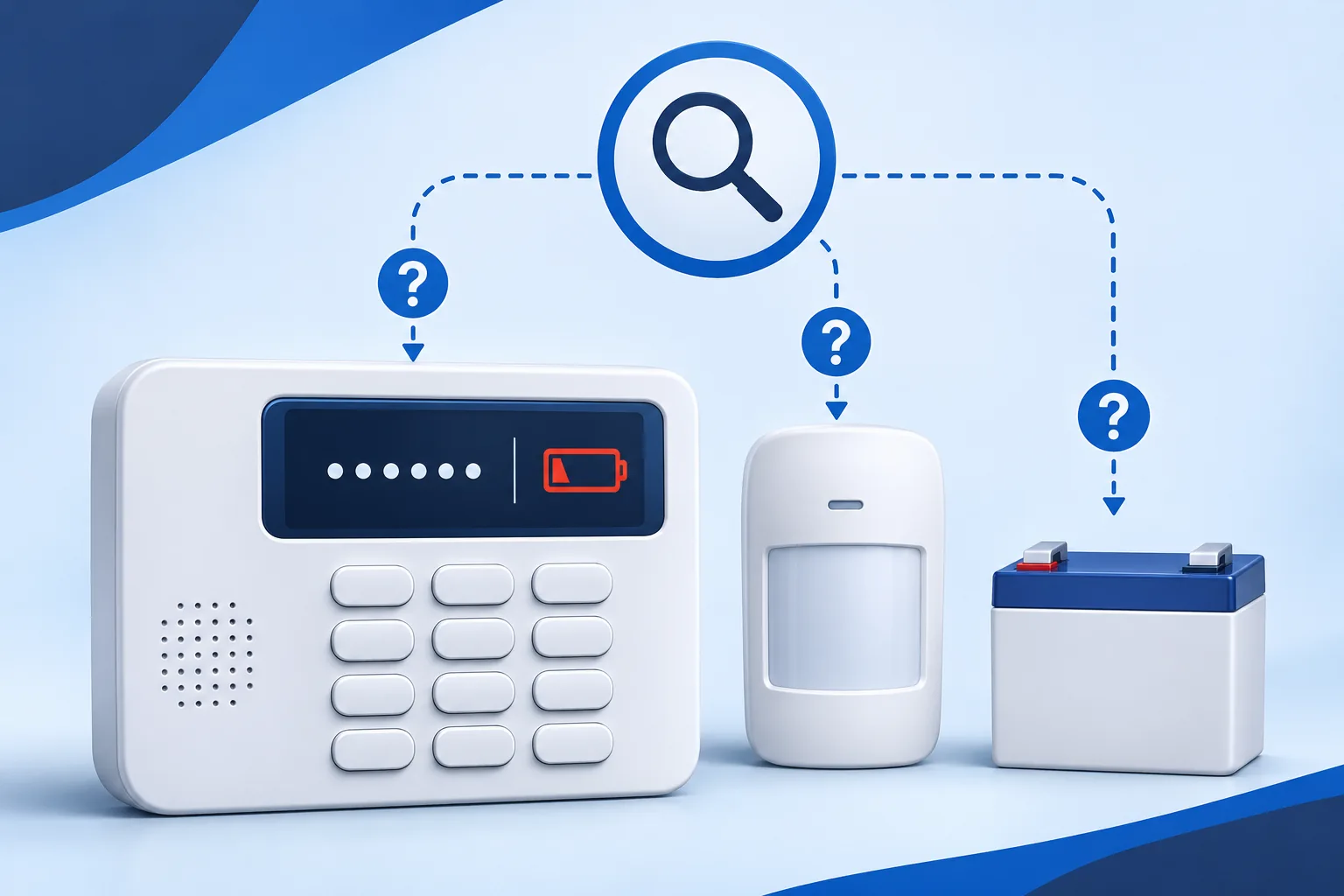
An alarm can contain several different batteries. A repeated warning needs the exact message and affected device identified before deciding what to replace or test. Acknowledging a warning does not establish that the battery, power supply or device is healthy.
Which battery is the alarm referring to?
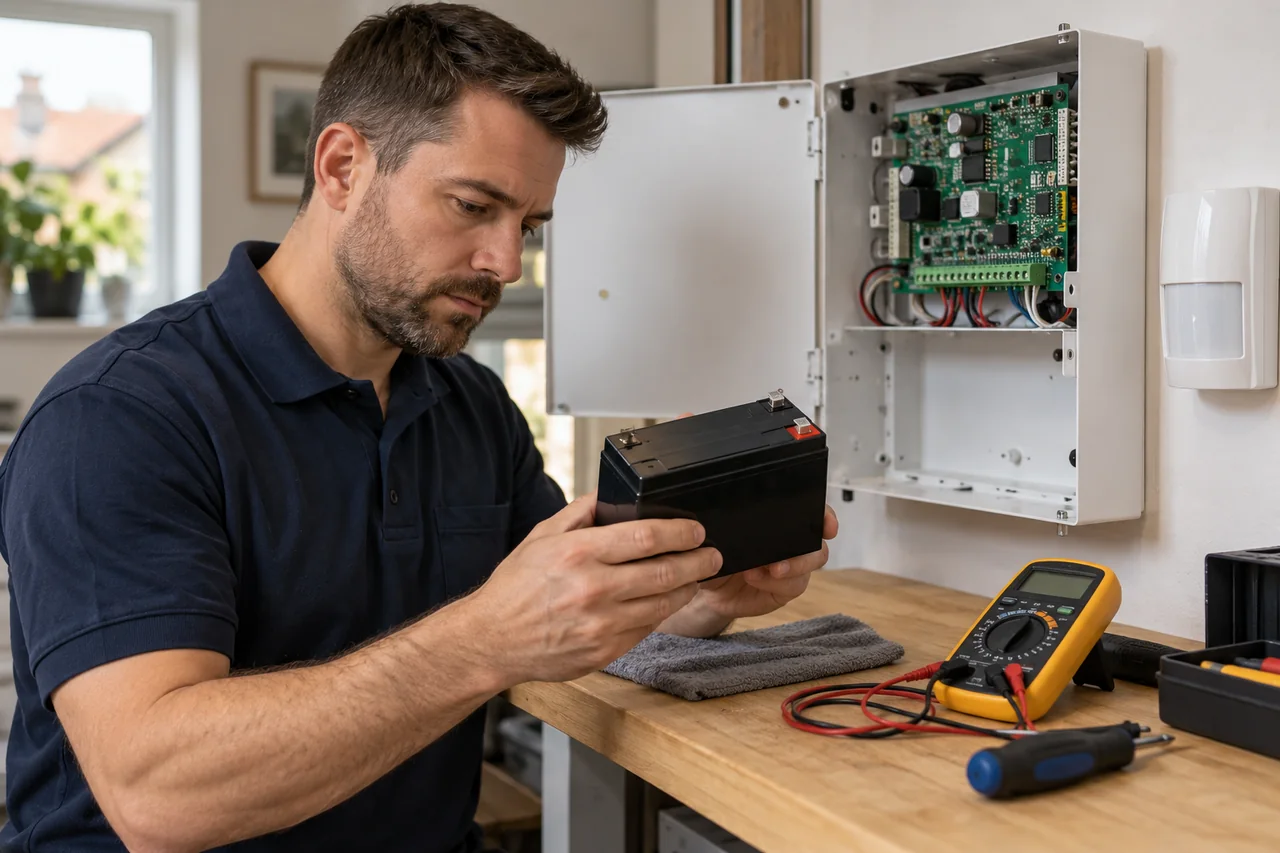
“Low battery” is not one universal diagnosis. Depending on the equipment, it may refer to the main control panel’s standby battery, a wireless detector, an external sounder or another battery-powered device. The keypad or app may identify the device or zone involved.
Record the exact wording and any device name. A main-panel battery issue and a detector battery warning involve different checks; replacing one does not resolve a warning from the other.
Texecom’s technical FAQs list low battery as one possible cause of a Ricochet supervision issue. This is also why a device-communication fault and a battery warning should not be treated as interchangeable diagnoses.
Why might a warning return?
A warning that returns after being acknowledged may still need investigation. The original condition may remain, a different device may be reporting, or a recent repair may need checking against the manufacturer’s requirements.
Tell the engineer whether a battery was recently changed, which device it was fitted to and when the warning returned. For a panel standby-battery fault, the assessment may also need to consider the power and charging arrangements. The message alone cannot establish which component is responsible.
Do not judge the system’s backup capability only by whether the keypad is lit. It may still be operating on mains power. Our alarm power-cut guide explains the role of backup power.
What can you check without opening equipment?
Useful information for the service visit
- The exact message, date and time, plus the named device or zone.
- Whether it followed a power interruption or other recent work.
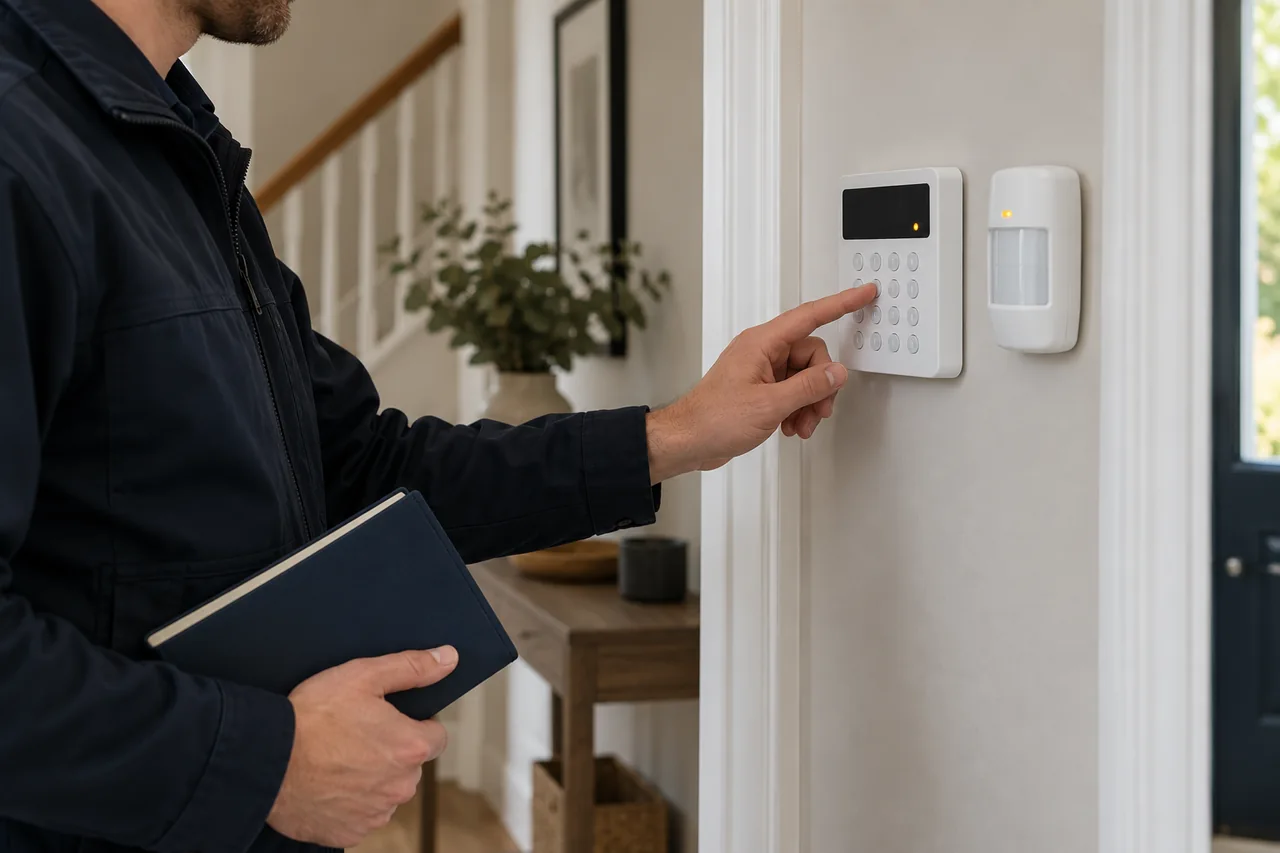
- What happens after the warning is acknowledged using the approved user instructions.
- Whether normal setting is affected and whether other faults are displayed.
- Any service record or battery-replacement information you already have.
Use the ordinary user instructions for your model. Avoid opening a panel, disconnecting supplies or changing sounder batteries simply to clear a warning: there can be tamper responses and electrical hazards. Texecom’s property-owner guidance directs owners to their installer for the battery issue described in its Veritas FAQs.
What should happen during an assessment?
The engineer should first confirm the reported fault and the affected equipment, then agree the necessary checks and work. Depending on the installation, this may include battery condition, suitable replacement specifications, power arrangements, device reporting and the relevant functional tests.
Ask what was found, what was changed and whether any limitations remain. A cleared message is useful only alongside confirmation that the underlying issue has been addressed. Existing equipment may need further repair if the battery is not the sole cause.
If the system is monitored, coordinate work with the service provider. Follow the agreed procedure if the alarm is sounding or cannot be operated normally.
Keep a record and check what your plan includes
Keep the service date, device details and work completed with the alarm records. If another warning appears, those details help distinguish a repeat fault from a separate device needing attention.
WESEC’s maintenance options include replacement sensor batteries as described in the plan. Panel and bell batteries are not included in maintenance. Check the proposed work and charges before agreeing a visit; do not assume every battery is covered. See Maintenance Plans for the current options.
Tell us your postcode, alarm model if known and the exact warning. Keep PINs and app passwords out of the enquiry. We can discuss alarm servicing and fault assessment or support for an inherited installation.
Discuss your own property. WESEC is based in Aylesbury and covers surrounding areas, including Milton Keynes and Tring, subject to postcode confirmation. Check our service areas.