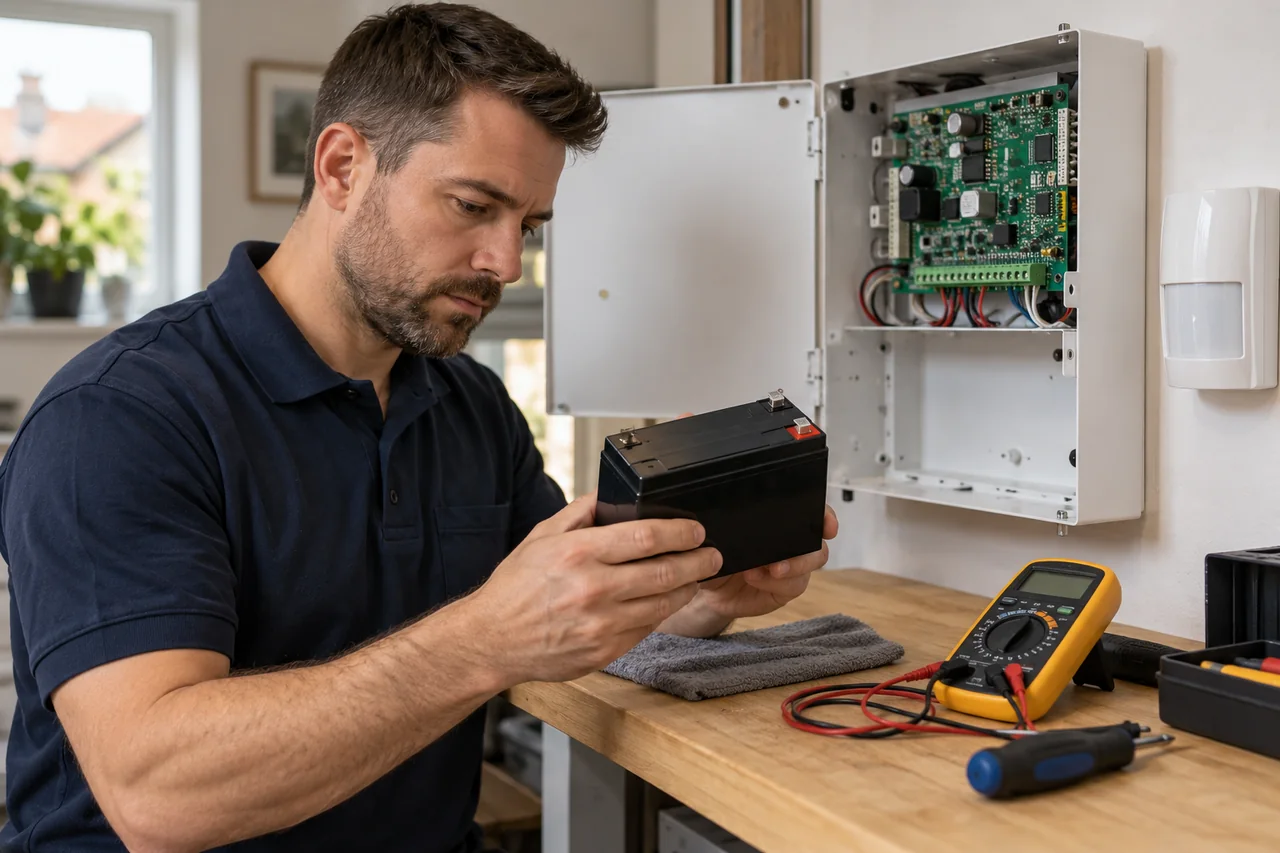
Why does my alarm go off when it isn’t set?
Understand why tamper, system and other continuously active functions can need attention even while the intrusion alarm is unset.
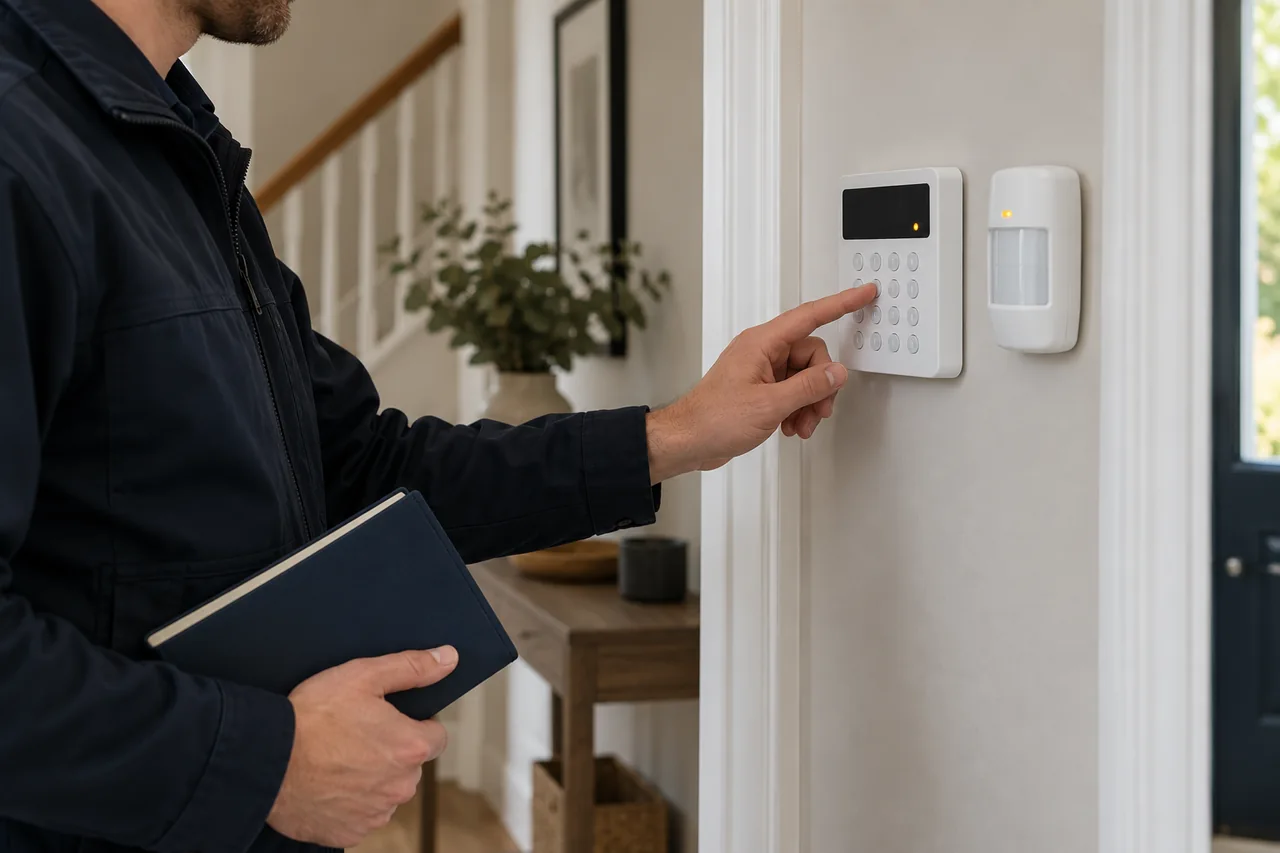
Unsetting an alarm does not necessarily disable tamper protection or every system function. A cover, cable, sounder, power or other configured fault can produce an indication or activation depending on the system. The event log and a proper diagnosis are more useful than repeatedly resetting it.
Separate an alarm activation from a warning
Identify what actually happened: an external sounder, an internal sounder, a keypad warning or a phone message. Note whether the system was fully unset, partly set or being used in a different area.
The same description—“it went off”—can cover several different events. The exact display, affected zone and time help distinguish a detection event, tamper event, fault or another configured function.
Why tamper protection can matter while unset
Tamper circuits are designed to detect interference with parts of the system, such as a housing or connection. Depending on the configuration, these functions can remain active when everyday intrusion detection is unset.
A loose cover, damaged cable or deteriorating component can therefore require attention without anyone deliberately interfering. Texecom’s technical FAQs illustrate how tamper and supervision issues depend on the equipment and configuration. The message is a starting point for diagnosis, not proof of a particular failed part.
Look for patterns without disturbing equipment
Useful clues include recent decorating, a power interruption, building work, bad weather or a warning linked to one device. Tell the engineer whether the event happens at a similar time or follows someone opening a particular door.
- Photograph the message without exposing access codes.
- Keep a note of times and what was happening nearby.
- Use the normal user procedure to acknowledge or silence the system if appropriate.
- Arrange support if the fault repeats or normal operation cannot be restored.
Do not bypass a tamper circuit or disconnect the sounder to make the symptom disappear. That removes information and may leave part of the protection ineffective.
Why repeated resets are not a repair
A reset may clear a display temporarily while the cause remains. Intermittent faults may need the event history, a physical inspection and checks of wiring, power and the affected equipment.
Ask for an explanation of the identified cause, work completed and any remaining limitation. If parts are unsupported, discuss the scope of a repair or upgrade rather than assuming the whole system must be replaced.
What to tell WESEC
Send your postcode, the visible keypad model, exact message and whether the system was fully or partly set. Tell us if there has been recent work or a power issue and whether any part now fails to operate normally.
An alarm diagnostic visit can establish what is happening. If the fault follows power loss, also read what happens during a power cut. We agree the next step before work is arranged.
Discuss your own property. WESEC is based in Aylesbury and covers surrounding areas, including Milton Keynes and Tring, subject to postcode confirmation. Check our service areas.